The World's Most Famous UNESCO World Heritage Sites
The World's Most Famous UNESCO World Heritage Sites
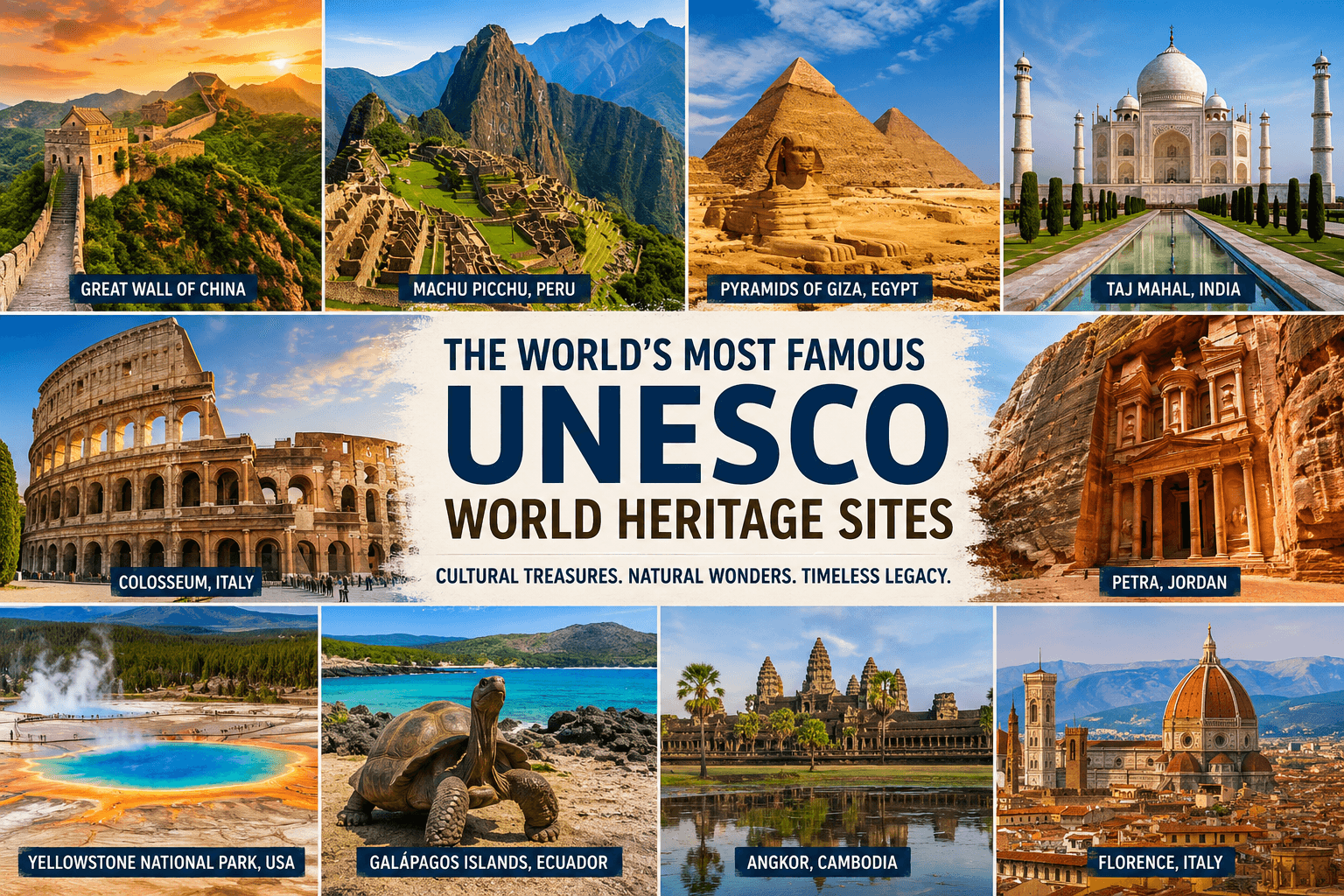
Introduction
The world is filled with extraordinary places that tell the story of human civilization and the beauty of nature. Some destinations are so unique and culturally significant that they have earned recognition as UNESCO World Heritage Sites. These remarkable locations are protected because of their outstanding value to humanity, ensuring that future generations can continue to learn from and admire them.
From ancient cities and magnificent temples to breathtaking national parks and natural wonders, UNESCO World Heritage Sites attract millions of travelers every year. They offer much more than beautiful scenery—they provide unforgettable experiences, preserve history, and celebrate the rich cultural and natural diversity of our planet.
Whether you are a history enthusiast, an adventure seeker, or someone who simply enjoys discovering new places, visiting these iconic destinations is a journey unlike any other.
What Are UNESCO World Heritage Sites?
A UNESCO World Heritage Site is a place recognized by the United Nations Educational, Scientific and Cultural Organization (UNESCO) for its exceptional cultural, historical, scientific, or natural importance. These sites are carefully protected because they represent valuable treasures that belong to all of humanity.
The UNESCO World Heritage List includes hundreds of remarkable destinations across the globe, ranging from ancient monuments and archaeological sites to forests, mountains, islands, and marine ecosystems. Each site reflects a unique chapter of our shared history or showcases the incredible beauty of the natural world.
Why UNESCO World Heritage Sites Are Important
UNESCO World Heritage Sites are more than popular tourist attractions. They play a vital role in preserving the world's cultural identity and natural heritage.
Some of their greatest benefits include:
• Protecting historical landmarks for future generations.
• Preserving endangered ecosystems and wildlife.
• Promoting cultural understanding among different nations.
• Supporting local economies through sustainable tourism.
• Encouraging education, research, and heritage conservation.
These sites remind us of the importance of protecting both human achievements and the environment.
The Great Wall of China
A Symbol of Ancient Engineering
Stretching thousands of kilometers across northern China, the Great Wall of China is one of the world's most impressive architectural achievements. Originally built to defend ancient Chinese kingdoms from invasions, the wall has become a symbol of strength, determination, and engineering excellence.
Visitors can walk along restored sections of the wall while enjoying spectacular mountain views and learning about China's rich history. Its immense scale continues to amaze travelers from around the world.
Machu Picchu, Peru
The Lost City of the Incas
Hidden high in the Andes Mountains, Machu Picchu is one of the most fascinating archaeological sites ever discovered. Built during the fifteenth century by the Inca civilization, this ancient city remained hidden from the outside world for centuries before becoming one of the world's greatest travel destinations.
Surrounded by dramatic mountain landscapes, Machu Picchu offers visitors a unique combination of history, mystery, and breathtaking natural beauty.
The Pyramids of Giza, Egypt
Timeless Wonders of the Ancient World
The Pyramids of Giza have fascinated people for thousands of years. Constructed as royal tombs for Egyptian pharaohs, these magnificent structures demonstrate the extraordinary engineering skills of ancient Egypt.
Standing beside the famous Great Sphinx, the pyramids continue to attract historians, archaeologists, and travelers eager to witness one of humanity's greatest achievements.
The Taj Mahal, India
A Monument of Eternal Love
The Taj Mahal is one of the world's most recognizable landmarks and a masterpiece of Mughal architecture. Built by Emperor Shah Jahan in memory of his beloved wife Mummtaz Mahal, this white marble monument represents love, beauty, and artistic perfection.
Its elegant gardens, intricate carvings, and changing colors throughout the day make it one of the most photographed heritage sites in the world.
The Colosseum, Italy
A Window into Ancient Rome
Located in the heart of Rome, the Colosseum stands as one of the greatest symbols of the Roman Empire. This massive amphitheater once hosted gladiator contests, theatrical performances, and public events attended by thousands of spectators.
Today, visitors can explore its remarkable architecture while gaining insight into one of history's most influential civilizations.
Petra, Jordan
The Rose-Red City
Carved directly into pink sandstone cliffs, Petra is one of the world's most breathtaking archaeological treasures. Once an important trading center of the Nabataean Kingdom, the city is famous for its magnificent rock-cut architecture and impressive water management system.
Walking through the narrow canyon leading to the iconic Treasury is an unforgettable experience that leaves visitors in awe.
Yellowstone National Park, United States
Nature at Its Most Spectacular
Not all UNESCO World Heritage Sites are man-made. Yellowstone National Park showcases the incredible power and beauty of nature with its geysers, hot springs, waterfalls, forests, and diverse wildlife.
Visitors can witness the famous Old Faithful geyser, observe bison and wolves in their natural habitat, and explore one of the world's oldest national parks.
The Galápagos Islands, Ecuador
A Living Laboratory of Nature
The Galápagos Islands are among the world's most important natural heritage sites. Their unique wildlife inspired Charles Darwin's theory of evolution and continues to attract scientists and nature lovers from around the globe.
Visitors can observe giant tortoises, marine iguanas, blue-footed boobies, sea lions, and countless other species found nowhere else on Earth.
Angkor, Cambodia
The Largest Religious Monument Complex
The ancient city of Angkor is home to the magnificent Angkor Wat, the largest religious monument in the world. Built by the Khmer Empire, the temples feature remarkable carvings, towering stone structures, and impressive architectural design.
Watching the sunrise over Angkor Wat is considered one of the most unforgettable travel experiences in Southeast Asia.
The Historic Centre of Florence, Italy
The Birthplace of the Renaissance
Florence is often called the cradle of the Renaissance because of its enormous contribution to art, architecture, and culture. The city's historic center is filled with beautiful cathedrals, museums, palaces, and public squares that showcase masterpieces created by legendary artists such as Leonardo da Vinci, Michelangelo, and Botticelli.
Walking through Florence feels like stepping into a living museum where history comes alive around every corner.
How UNESCO Sites Benefit Local Communities
UNESCO World Heritage Sites do far more than attract international tourists. They create employment opportunities, support local businesses, preserve traditional crafts, and encourage sustainable development.
Communities living near these sites often benefit from:
• Increased tourism revenue.
• Better infrastructure and transportation.
• Growth of hotels, restaurants, and local markets.
• Preservation of traditional culture and customs.
• Employment in guiding, hospitality, and conservation projects.
Responsible tourism ensures that both visitors and local communities benefit while protecting these extraordinary places for future generations.
Tips for Visiting UNESCO World Heritage Sites Responsibly
Every traveler has a responsibility to help preserve these remarkable destinations. Simple actions can make a significant difference.
Follow these responsible travel practices:
• Respect local customs and cultural traditions.
• Avoid touching or damaging ancient monuments.
• Stay on designated walking paths.
• Dispose of waste responsibly.
• Support local businesses and certified tour guides.
• Reduce the use of single-use plastics.
• Follow all conservation rules and regulations.
Responsible tourism helps maintain the beauty and historical value of these sites for generations to come.
The Future of UNESCO World Heritage Conservation
As global tourism continues to grow, protecting UNESCO World Heritage Sites has become more important than ever. Climate change, pollution, urban development, and overtourism pose serious challenges to many historic and natural landmarks.
Governments, conservation organizations, local communities, and travelers must work together to ensure these treasures remain protected. Sustainable tourism, responsible visitor behavior, and continued investment in conservation efforts will play a vital role in preserving the world's heritage.
Conclusion
The world's most famous UNESCO World Heritage Sites represent the finest examples of human achievement and natural beauty. From the ancient wonders of Egypt and Peru to the breathtaking landscapes of Yellowstone and the Galápagos Islands, each destination tells a unique story that connects us to our shared past and inspires future generations.
Visiting these extraordinary places is about more than sightseeing. It is an opportunity to appreciate different cultures, learn from history, admire nature, and understand the importance of preserving our world's greatest treasures. By traveling responsibly and supporting conservation efforts, every visitor can help ensure that these remarkable landmarks continue to inspire people for centuries to come.