How to Travel Sustainably Without Spending More
How to Travel Sustainably Without Spending More
Introduction
Traveling allows us to discover new cultures, experience breathtaking landscapes, and create memories that stay with us for a lifetime. In recent years, more people have become aware of the importance of protecting the environment while exploring the world. This has led to the growing popularity of sustainable travel, a way of traveling that minimizes environmental impact while supporting local communities and preserving natural and cultural heritage.
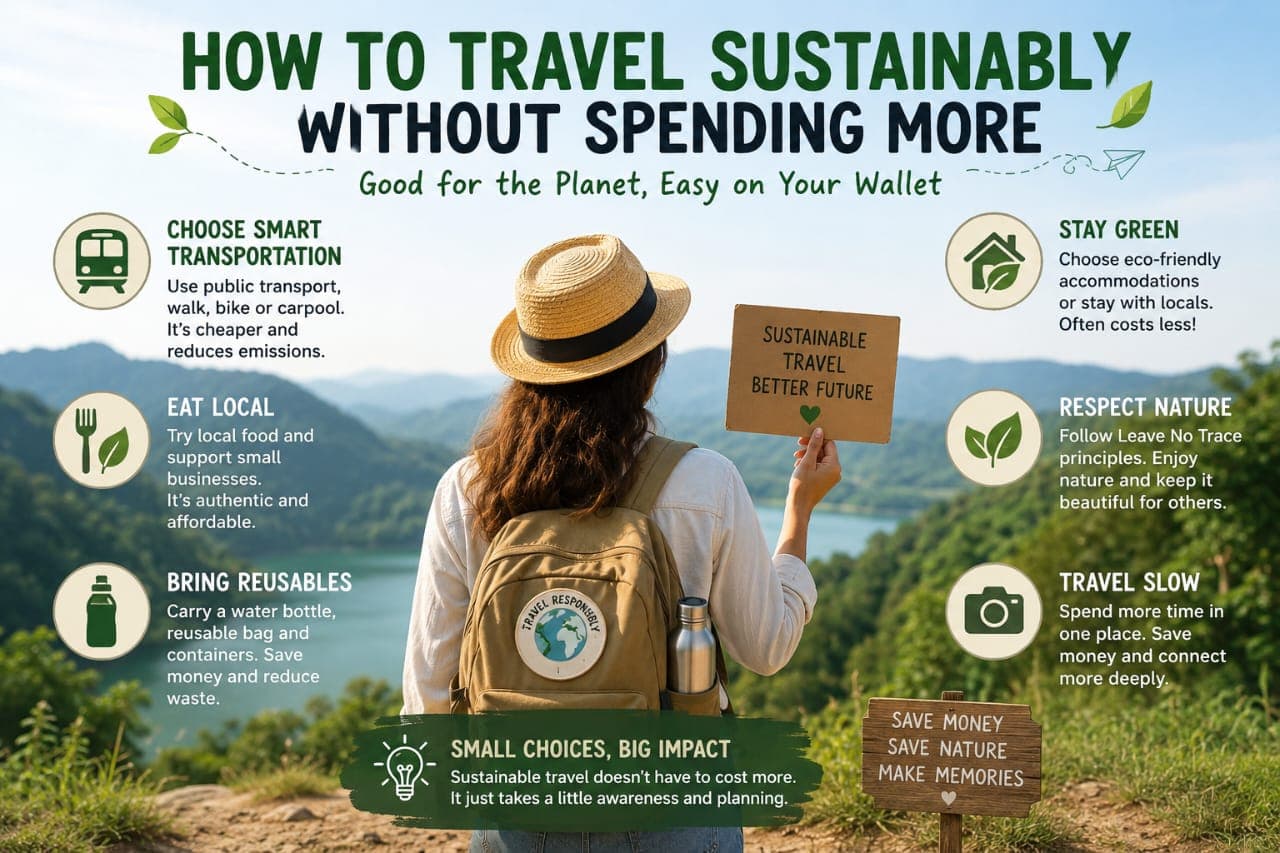
Many people believe that traveling sustainably is expensive and only suitable for luxury travelers. In reality, sustainable travel is often more affordable than traditional tourism. Small changes, such as choosing local transportation, staying in locally owned accommodations, and reducing waste, can lower travel expenses while making a positive impact on the places you visit.
The good news is that you do not need a large budget to become a responsible traveler. With thoughtful planning and smart decisions, you can enjoy meaningful travel experiences while protecting the destinations you love.
What Is Sustainable Travel?
Sustainable travel is about making responsible choices that benefit the environment, local communities, and future generations. It encourages travelers to reduce waste, conserve natural resources, respect local cultures, and support businesses that contribute positively to their communities.
Rather than focusing only on popular attractions, sustainable travel encourages visitors to experience destinations in a way that protects their beauty and authenticity. It is not about giving up comfort or enjoyment. Instead, it is about making better decisions that allow tourism to remain beneficial for everyone.
Plan Your Trip Carefully
Travel During the Off-Season
One of the easiest ways to travel sustainably while saving money is by avoiding peak tourist seasons. During quieter months, flights, hotels, and attractions are often available at lower prices. Fewer crowds also reduce pressure on local infrastructure and create a more enjoyable travel experience.
Traveling during the off-season allows you to explore destinations at a relaxed pace while helping local businesses maintain income throughout the year rather than only during busy holiday periods.
Choose Destinations Wisely
Instead of visiting overcrowded tourist hotspots, consider exploring lesser-known destinations. Hidden towns, peaceful villages, and regional attractions often provide authentic experiences at lower costs.
These destinations usually have affordable accommodations, lower entrance fees, and less commercialized attractions. At the same time, your visit supports communities that benefit greatly from tourism.
Choose Eco-Friendly Transportation
Transportation often represents one of the largest environmental impacts of any trip. Fortunately, choosing more sustainable options can also help reduce travel expenses.
Use Public Transport
Buses, trains, and metro systems are usually much cheaper than taxis or rental cars. Public transportation allows travelers to experience local life while reducing fuel consumption and traffic congestion.
Walking and cycling are even better options for exploring cities. They cost nothing, improve your health, and allow you to discover places that many visitors overlook.
Reduce Unnecessary Flights
If possible, choose direct flights instead of multiple connecting flights, as takeoffs and landings produce the highest fuel consumption. For shorter distances, trains or buses can often be more environmentally friendly and more economical.
Planning your itinerary carefully also helps reduce unnecessary travel between destinations, saving both time and money.
Stay in Locally Owned Accommodations
Choosing locally owned guesthouses, family-run hotels, or eco-friendly accommodations benefits both travelers and local communities.
Support Local Businesses
Unlike large international hotel chains, locally owned accommodations often keep tourism income within the community. This supports employment, encourages entrepreneurship, and strengthens local economies.
Many family-run guesthouses also provide personalized hospitality, home-cooked meals, and valuable local travel advice that create more authentic experiences.
Save Money While Traveling
Locally owned accommodations are frequently more affordable than luxury hotels. They often include breakfast, free Wi-Fi, and personalized services that improve your overall travel experience without increasing your budget.
Eat Like a Local
Food is one of the best ways to experience a new destination. Choosing local restaurants instead of international chains benefits both your budget and the local economy.
Enjoy Authentic Cuisine
Family-owned restaurants and street food vendors often serve fresh, traditional meals at reasonable prices. Eating locally introduces travelers to regional flavors while supporting small businesses and local farmers.
Reduce Food Waste
Order only what you can comfortably finish and carry a reusable container whenever possible. Reducing food waste is both environmentally responsible and financially sensible.
Reduce Plastic Waste
One of the simplest ways to travel sustainably is by minimizing single-use plastics.
Simple changes include:
• Carrying a reusable water bottle.
• Using reusable shopping bags.
• Bringing reusable cutlery and drinking straws.
• Avoiding unnecessary plastic packaging.
These small habits help reduce pollution while saving money on disposable products throughout your journey.
Respect Local Culture and Traditions
Responsible travel is not only about protecting nature but also about respecting the people who call each destination home.
Learn Before You Visit
Taking time to learn about local customs, traditions, and etiquette demonstrates respect for the community. Even learning a few basic greetings in the local language creates positive interactions with residents.
Dress and Behave Appropriately
Different cultures have different expectations regarding clothing and behavior. Respecting these customs helps create meaningful cultural exchanges and supports responsible tourism.
Support Local Artisans and Small Businesses
Shopping locally benefits both travelers and communities.
Instead of purchasing mass-produced souvenirs, consider buying handmade crafts, traditional artwork, locally produced food, or handcrafted clothing. These purchases directly support local artisans and preserve traditional skills that have often been passed down through generations.
Choosing locally guided tours also ensures that tourism income remains within the community while providing visitors with authentic cultural experiences.
Protect Nature While Exploring
Natural landscapes are among the greatest attractions for travelers, making their protection essential.
Follow Designated Trails
Staying on marked paths helps protect fragile ecosystems and prevents damage to wildlife habitats.
Leave No Trace
Always take your rubbish with you, avoid disturbing wildlife, and never remove plants, shells, rocks, or historical objects from natural or protected areas.
Respecting nature ensures that future visitors can enjoy the same beautiful landscapes.
Travel Light
Packing only what you need offers several advantages.
Lighter luggage makes transportation easier, reduces airline baggage fees, and contributes to lower fuel consumption during flights. It also encourages thoughtful packing and minimizes unnecessary purchases while traveling.
Choosing versatile clothing and reusable travel accessories allows you to travel comfortably without carrying excessive baggage.
Use Technology Wisely
Modern technology makes sustainable travel easier than ever.
Travel apps can help you:
• Find eco-friendly accommodations.
• Use digital boarding passes instead of printed tickets.
• Navigate public transportation.
• Discover local restaurants.
• Locate walking routes and cycling paths.
Using digital maps, electronic tickets, and mobile payment systems reduces paper waste while simplifying your travel experience.
Understand That Sustainable Travel Is About Small Choices
Many people believe they must completely change their travel habits to become sustainable travelers. In reality, meaningful change comes from making small, consistent decisions.
Choosing one local meal instead of a chain restaurant, carrying a reusable bottle, walking instead of taking a taxi, or supporting a family-owned business may seem like small actions. However, when millions of travelers make similar choices, the positive impact becomes enormous.
Sustainable travel is not about perfection. It is about making thoughtful decisions whenever possible.
The Long-Term Benefits of Sustainable Travel
Traveling responsibly benefits everyone involved.
For travelers, it often leads to more authentic experiences, lower expenses, and stronger cultural connections.
For local communities, sustainable tourism creates employment, supports small businesses, preserves traditions, and strengthens local economies.
For the environment, responsible travel helps reduce pollution, conserve natural resources, and protect wildlife and ecosystems.
These combined benefits ensure that destinations remain attractive, healthy, and welcoming for future generations.
Conclusion
Traveling sustainably does not require a larger budget or major lifestyle changes. In fact, many environmentally responsible choices naturally reduce travel costs while creating richer and more meaningful experiences. By choosing public transportation, supporting local businesses, reducing waste, respecting cultural traditions, and protecting natural environments, every traveler can contribute to a more sustainable tourism industry.
The future of travel depends on the decisions we make today. Every responsible choice, no matter how small, helps preserve the beauty, culture, and biodiversity of the destinations we visit. Sustainable travel is not about spending more—it is about traveling smarter, respecting the places we explore, and ensuring that future generations can enjoy the same unforgettable experiences.
The most memorable journeys are not measured by how much money we spend, but by the positive impact we leave behind. By embracing sustainable travel, we become part of a global movement that values both exploration and preservation, making every adventure more meaningful for ourselves and for the world.