How Tourism Benefits Local Communities
How Tourism Benefits Local Communities
Introduction
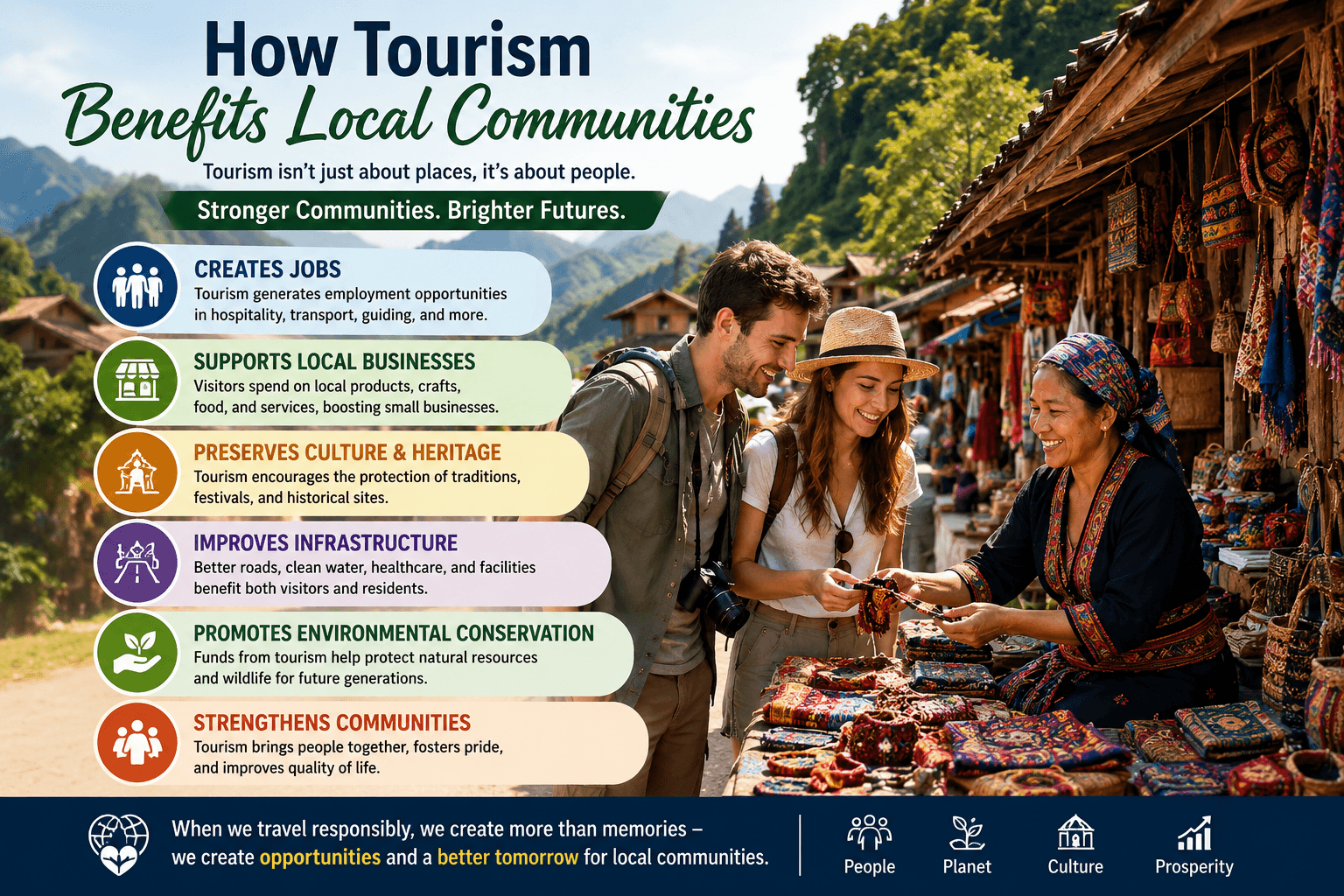
Tourism is much more than visiting beautiful places and taking memorable photographs. It is a powerful force that connects people, cultures, and economies across the world. Every year, millions of travelers explore new destinations, bringing opportunities that extend far beyond the tourism industry itself. While visitors enjoy discovering new cultures and landscapes, local communities benefit from increased income, better infrastructure, improved public services, and stronger cultural preservation.
When managed responsibly, tourism creates a positive relationship between travelers and local residents. It supports businesses, encourages environmental conservation, and helps communities showcase their traditions and heritage with pride. From small villages to bustling cities, tourism has the ability to improve lives while creating meaningful experiences for visitors. Understanding these benefits highlights why sustainable tourism has become an important priority for destinations around the world.
Creating Employment Opportunities
One of the greatest benefits of tourism is its ability to create employment. Every visitor contributes to a network of businesses and services that require skilled workers. Hotels, restaurants, transportation companies, travel agencies, tour operators, and entertainment venues all depend on tourism to operate successfully.
Direct Employment
The tourism industry provides thousands of direct jobs in sectors such as hospitality, transportation, travel services, and customer support. These careers offer stable income and valuable opportunities for professional growth.
Indirect Employment
Beyond direct employment, tourism also creates indirect jobs in agriculture, construction, retail, handicrafts, and local manufacturing. Farmers supply fresh produce to hotels and restaurants, local artisans create handmade products for tourists, and transportation providers help visitors reach different attractions. This wide range of employment opportunities allows many families to earn a stable income while improving their quality of life.
For young people entering the workforce, tourism offers valuable career opportunities in hospitality, customer service, marketing, event management, and digital tourism. As tourism continues to grow, new skills and professional development opportunities become available for local residents.
Supporting Small Businesses
Tourism plays a significant role in helping small businesses thrive. Instead of relying only on large companies, many travelers prefer to support locally owned accommodations, family-run restaurants, neighborhood cafés, souvenir shops, and traditional markets.
Keeping Money Within the Community
When visitors choose local businesses, more money remains within the community. This encourages entrepreneurship and motivates residents to start their own businesses based on local culture, traditions, and natural resources.
Promoting Local Products
Local entrepreneurs also have the opportunity to introduce visitors to authentic products that reflect the identity of their community. Handmade crafts, locally produced food, traditional clothing, and regional artwork become valuable sources of income while preserving local traditions.
Preserving Cultural Heritage
Tourism encourages communities to protect and celebrate their cultural heritage. Historical landmarks, traditional architecture, museums, music, dance, festivals, and local customs often become major attractions that draw visitors from around the world.
Protecting Historical Sites
The growing interest in cultural tourism motivates governments and local organizations to invest in preserving important historical sites. Restoration projects help protect ancient buildings, while museums and cultural centers educate both residents and visitors about local history.
Keeping Traditions Alive
Traditional festivals, ceremonies, and performances gain renewed importance as tourism creates opportunities for communities to share their heritage with international audiences. Rather than allowing traditions to disappear over time, tourism helps keep them alive for future generations.
Improving Infrastructure
As tourism develops, many communities benefit from improved infrastructure. Roads, airports, railway stations, public transportation systems, and communication networks often receive investment to meet the needs of increasing visitor numbers.
Better Public Facilities
These improvements benefit local residents just as much as tourists. Better roads reduce travel time, improved public transportation makes commuting easier, and upgraded utilities enhance daily life.
Long-Term Community Growth
Access to reliable internet, clean water, healthcare facilities, and public spaces often improves as governments recognize the economic value of tourism. Infrastructure developed for tourism frequently supports long-term community growth by attracting investment and encouraging business development in other sectors.
Encouraging Environmental Conservation
Tourism can also play an important role in protecting the environment when managed responsibly. Many destinations recognize that healthy ecosystems are essential for attracting visitors and maintaining their natural beauty.
Supporting Conservation Projects
Revenue generated through tourism often supports conservation projects that protect forests, wildlife, rivers, coral reefs, and national parks. Entrance fees, guided tours, and eco-tourism programs provide funding for environmental protection while creating employment for local guides and conservation workers.
Promoting Sustainable Practices
Communities become more motivated to preserve their natural surroundings because they understand that protecting the environment also protects their livelihoods. Sustainable tourism encourages responsible practices such as reducing waste, conserving water, protecting wildlife habitats, and promoting environmentally friendly transportation.
Strengthening Local Economies
Tourism contributes significantly to economic growth by increasing the circulation of money within communities. Visitors spend on accommodation, food, transportation, shopping, entertainment, recreational activities, and cultural experiences.
Increasing Local Income
This continuous flow of spending benefits multiple sectors of the local economy. As businesses earn higher revenues, they can employ more people, purchase goods from local suppliers, and invest in business improvements.
Supporting Public Services
Increased economic activity also generates tax revenue that governments can use to improve public services such as education, healthcare, and infrastructure. Unlike industries that depend on limited natural resources, tourism creates long-term opportunities when developed responsibly.
Promoting Cultural Exchange
One of the most valuable aspects of tourism is the opportunity for cultural exchange.
Learning From Each Other
Travelers learn about different lifestyles, traditions, languages, and customs, while local communities gain exposure to people from diverse backgrounds. These interactions encourage mutual respect, understanding, and appreciation between cultures.
Building Lasting Connections
Conversations between visitors and residents often lead to meaningful friendships and unforgettable experiences. Tourism also helps local people develop communication skills and broaden their understanding of global cultures.
Encouraging Community Development
Successful tourism often inspires communities to work together toward shared goals.
Community Participation
Residents, business owners, local authorities, and tourism organizations collaborate to improve attractions, organize cultural events, and maintain public spaces. Community participation strengthens local identity while encouraging pride in preserving traditions and natural resources.
Creating New Opportunities
Tourism also creates opportunities for volunteer programs, educational workshops, and training initiatives that improve skills and increase employment opportunities.
Supporting Sustainable Development
Modern tourism increasingly emphasizes sustainability rather than simply attracting larger numbers of visitors.
Responsible Growth
Sustainable tourism encourages responsible resource management, supports local businesses, protects biodiversity, and respects cultural traditions.
A Better Future
Communities that embrace sustainable tourism become stronger, more resilient, and better prepared for future challenges while ensuring that tourism continues to benefit future generations.
Challenges and the Importance of Responsible Tourism
Although tourism offers numerous benefits, it must be carefully managed to avoid negative consequences.
Managing Tourism Responsibly
Excessive tourism can lead to overcrowding, increased waste, pressure on local resources, rising living costs, and environmental damage. Governments, businesses, local communities, and travelers all share the responsibility of promoting responsible tourism.
The Role of Travelers
Visitors can make a positive difference by respecting local customs, supporting local businesses, reducing waste, conserving natural resources, and protecting cultural and natural attractions.
The Future of Community-Based Tourism
Community-based tourism is becoming increasingly popular because it places local people at the center of tourism development.
Empowering Local Communities
Instead of allowing outside companies to control tourism, communities manage accommodations, tours, cultural experiences, and conservation projects themselves. This ensures that tourism income remains within the community while preserving local traditions and protecting natural environments.
Looking Ahead
As travelers continue to seek meaningful experiences, community-based tourism is expected to play an even greater role in shaping the future of global tourism.
Conclusion
Tourism has the power to transform local communities in meaningful and lasting ways. It creates employment, supports small businesses, preserves cultural heritage, improves infrastructure, protects the environment, and strengthens local economies. Beyond its economic contributions, tourism brings people together, encourages cultural understanding, and inspires communities to take pride in their traditions and natural surroundings.
The greatest benefits of tourism are achieved when development is guided by responsibility, sustainability, and community involvement. By choosing to support local businesses, respect cultural traditions, and protect the environment, travelers become partners in creating positive change.
Every journey has the potential to benefit not only the visitor but also the people and places that make each destination unique. When tourism is practiced thoughtfully, it becomes a powerful tool for building stronger communities, preserving cultural identity, and creating opportunities that can be enjoyed for generations to come.